
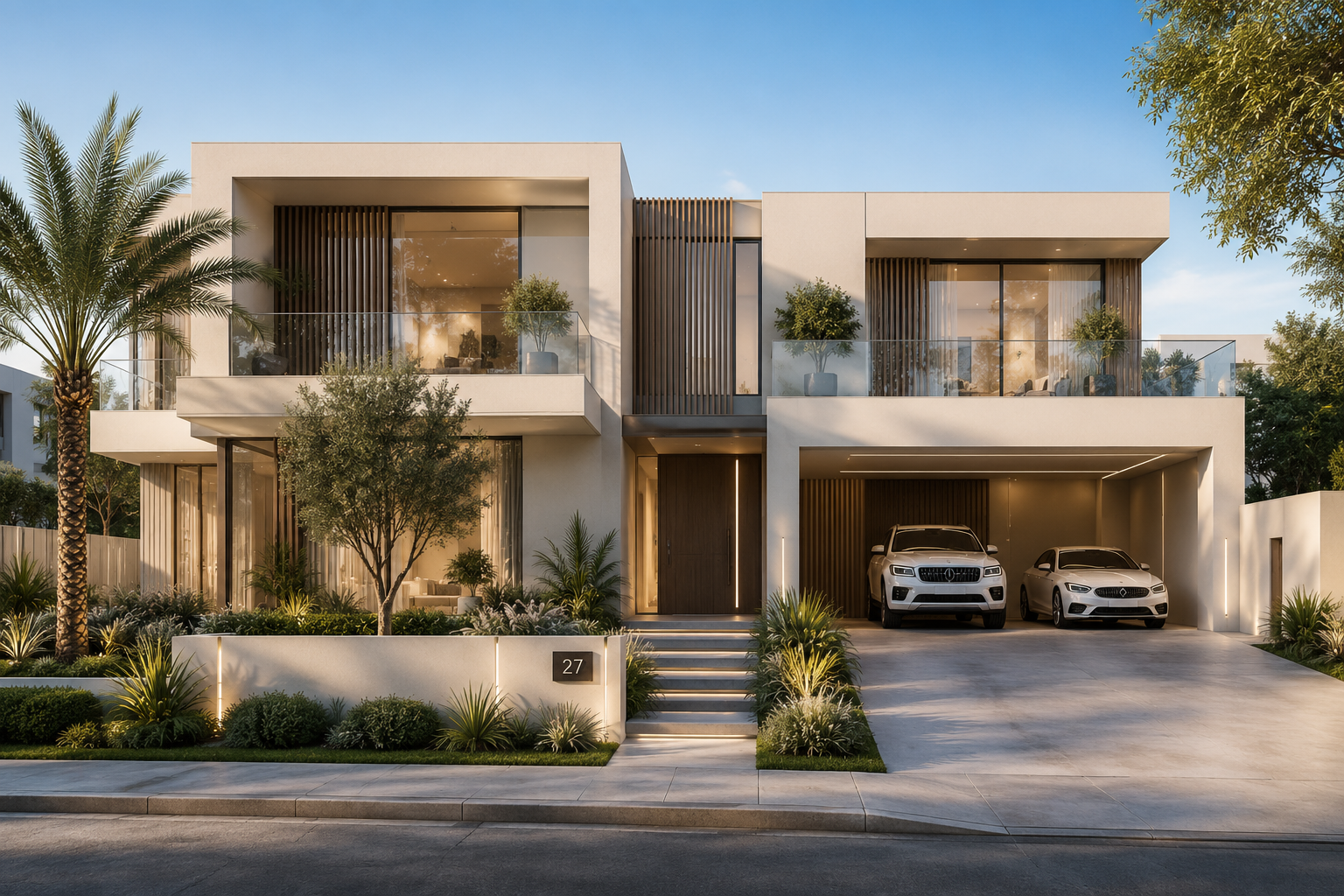
A villa renovation in Dubai is never just a construction project. It is a negotiation between your family’s daily life, a set of authority approvals you cannot skip, and a design vision that has to survive contact with real budgets and real timelines.
Done well, it transforms a tired, disconnected home into a villa that finally works the way you actually live. Done without a plan, it turns into open-ended costs and a home you cannot use for months longer than promised.
This guide walks through exactly what to expect from a villa renovation in Dubai, start to finish — the realistic timeline, the approvals nobody warns you about, what changes the cost, and where most renovations quietly go wrong. It is written from the design side, not the contractor side, because the biggest difference between a villa that feels renovated and one that feels reborn almost always comes down to design decisions made before a single wall is touched.
How Much Does Villa Renovation Cost in Dubai?
Cost is almost always the first question, so let’s start there. Villa renovation budgets in Dubai vary enormously because “renovation” can mean a cosmetic refresh or a full structural overhaul — and the two are not comparable.
- Cosmetic refresh (paint, flooring, kitchen and bathroom surfaces, no layout changes) — typically starts from AED 150,000 for a smaller villa
- Mid-range renovation (new layouts in select rooms, upgraded joinery, lighting redesign, partial MEP work) — commonly AED 350,000–800,000
- Full luxury renovation (structural changes, imported materials, bespoke joinery, façade and landscaping) — can run well beyond AED 1,000,000, and significantly more for large villas in premium communities
Per-square-foot pricing is a useful planning shortcut: budget renovations sit roughly in the AED 250–450 per sq.ft range, mid-range work AED 450–700 per sq.ft, and luxury villa renovation in Dubai with a gut-and-rebuild scope runs AED 700–1,200+ per sq.ft. A sensible rule many Dubai villa owners use is to set aside 7–10% of the property’s current market value as a renovation budget.
One thing owners consistently underestimate: hidden costs. MEP upgrades, structural work, and authority approvals together can add 30–50% on top of what most people budget for visible finishes alone. This is the single biggest reason renovation quotes vary so widely between contractors — one has priced the whole scope, the other has priced only what you can see.
The Villa Renovation Timeline: Start to Finish
A realistic villa renovation timeline in Dubai runs from 8 weeks for a light cosmetic update to 6–18 months for a full structural transformation. Most mid-to-large villa renovations with some structural and MEP work land somewhere between 4 and 7 months once approvals are included. Here is what actually happens, in order.
Step 1 — Discovery and Design Consultation
Every renovation should begin with a site visit and an honest conversation — not about paint colours, but about how your family actually uses the villa. Which rooms feel dead? Where does the light fail you? What has your current layout never solved? A good design partner listens here before proposing anything. This stage typically takes 1–2 weeks.
Step 2 — Concept Design and 3D Visualisation
This is where the vision takes shape — space planning, material direction, lighting concepts, and photorealistic 3D renders so you can see the villa before a single wall comes down. Expect 2–4 weeks here, and treat it as the most important phase of the entire project. Changes are inexpensive on a render and expensive once construction has started.
Step 3 — Approvals and NOCs
This is the stage most owners are least prepared for, and the one most likely to derail your timeline if handled late. Depending on where your villa sits, you will need some combination of:
- Developer or community NOC — from Emaar, Nakheel, Meraas, DAMAC, or your master developer; usually taking 1–3 weeks
- Dubai Municipality or Trakhees building permit — required for structural changes, MEP relocation, wet-area work, or layout changes; typically 2–6 weeks
- DEWA clearance — required for electrical or plumbing modifications; usually 1–3 weeks
- Dubai Civil Defence sign-off — where fire alarms, sprinklers, or emergency exits are affected
Purely cosmetic work — paint, flooring, non-structural finishes — usually does not require a Dubai Municipality permit, though a community NOC may still apply. Anything structural, MEP-related, or layout-changing does. Run these approvals in parallel with design finalisation wherever possible, not after it — this alone is the difference between a 4-month renovation and a 7-month one.
Step 4 — Material Selection and Procurement
With approvals moving and design finalised, materials, joinery, sanitaryware, lighting fixtures, and furniture get ordered. Imported materials and bespoke joinery need the longest lead times — for premium or fully imported finishes, order 8–12 weeks ahead of when you will actually need them on site.
Step 5 — Site Mobilisation and Demolition
Protection of existing structures, utility disconnection, and demolition of the areas being renovated. On an occupied villa, this is usually when a phased plan becomes essential so your family retains at least partial use of the home.
Step 6 — Structural and MEP Works
Wall removal or addition, electrical rewiring, plumbing relocation, HVAC updates. This is the least visible and most technical phase — and the one where a design-led project management approach protects you from the two most common failure points: MEP clashing with the design intent, and inspections being missed until they delay handover.
Step 7 — Finishing, Joinery, and Styling
Flooring, wall finishes, custom joinery installation, lighting fixtures, and finally furniture and styling. This is where the design vision from Step 2 either gets realised faithfully or gets diluted by rushed decisions — it is worth protecting this phase from being compressed to save time elsewhere.
Step 8 — Snagging and Handover
A full walkthrough against the original design and specification, a snag list, rectification, and final handover. Insist on this stage regardless of how eager everyone is to call the project finished — it is what separates a villa that looks right on day one from one that still looks right a year later.
What Affects Your Renovation Timeline
- Scope — cosmetic work moves in weeks, structural work moves in months
- Community — villas in Trakhees-governed zones (Palm Jumeirah, Jebel Ali areas) and master-developer communities such as Nakheel or Emaar plots often carry longer, more layered approval chains than standalone Dubai Municipality plots
- Occupied vs vacant — renovating while living in the villa almost always requires phasing, which extends the overall timeline even though it protects daily life
- Material sourcing — imported or bespoke items are the most common cause of schedule slippage
- Design changes mid-project — every change requested after construction has started costs more in time than the same change requested at the render stage
Common Mistakes to Avoid in a Villa Renovation in Dubai
- Starting construction before approvals are confirmed — unauthorised structural work in Dubai can result in significant fines and a forced stop-work order, with completed work potentially needing to be undone
- Budgeting only for finishes — leaving no allowance for MEP work, structural changes, or approval fees
- Choosing a contractor before finalising the design — this usually locks you into someone else’s assumptions rather than your own vision
- Renovating room by room without a master plan — phased renovations without an overarching design plan typically cost more in total and rarely feel cohesive once finished
- Skipping snagging — the temptation to move back in immediately is understandable, but issues found after furniture arrives are far harder to fix
Why Design-Led Renovation Makes the Difference
Most villa renovation guides in Dubai are written from a construction-first perspective: what gets built, in what order, at what cost. That matters — but it answers only half the question. The other half is whether the finished villa actually feels different — whether the light, the flow, the materials, and the details make the home feel considered rather than simply updated.
At Five Atelier Interiors, every villa renovation starts with design intent, not a materials list. We lead with space planning, mood, and material story first, then build the construction plan, approvals, and procurement around that vision — so the process stays efficient without the final result feeling like a compromise. The result is a villa that has been renovated and reimagined, not just refreshed.
Ready to Start Your Villa Renovation?
Five Atelier Interiors designs and delivers villa renovations across Dubai — from concept and 3D visualisation through approvals, construction, and final styling.
Get in touch to start with a design consultation →
Browse our completed villa renovation projects, explore our residential interior design services, or learn more about our kitchen design and bathroom renovation services in Dubai.
Frequently Asked Questions
How long does a villa renovation take in Dubai?
A cosmetic refresh typically takes 8–12 weeks. A mid-range renovation with some structural and MEP work usually takes 4–7 months including approvals. A full structural overhaul of a large villa can take 6–18 months.
Do I need Dubai Municipality approval to renovate my villa?
You need Dubai Municipality or Trakhees approval for structural changes, MEP relocation, wet-area work, or layout changes. Purely cosmetic work such as painting or flooring usually does not require this permit, though a community or developer NOC may still be needed.
How much does a full villa renovation cost in Dubai?
Full villa renovations typically range from AED 150,000 for a smaller, cosmetic-only project to well over AED 1,000,000 for a large luxury villa with structural changes and imported materials. Most families renovating a full family home budget between AED 350,000 and 800,000.
Can I live in my villa during renovation?
Yes, with a phased renovation plan. This extends the overall timeline compared to a fully vacant renovation, but allows your family to retain use of unaffected parts of the home throughout the project.
What approvals does a villa renovation in Dubai need?
Depending on scope and location, you may need a developer or community NOC, a Dubai Municipality or Trakhees building permit, DEWA clearance for electrical or plumbing work, and Dubai Civil Defence approval where fire and life-safety systems are affected.
What is the biggest cause of villa renovation delays?
Starting design or construction before confirming the approval pathway, and ordering imported materials or bespoke joinery too late in the process.
Should I hire a designer or a contractor first for a villa renovation?
Finalising the design first is generally the stronger sequence. It gives you a clear scope and specification to price accurately, rather than locking into a contractor’s assumptions before your vision is fully defined.
Five Atelier Interiors is a luxury interior design and fitout studio in Dubai, delivering bespoke residential and commercial projects across the UAE.